
Still und bewegungslos sitzt der Mann auf dem Felsen. Er grübelt. Arme und Beine sind muskelbepackt – vielleicht ist er ein Tatmensch, ein Kämpfer, ein Held gar. Doch warum hat er sich niedergesetzt, worüber grübelt er, und – wer ist er eigentlich? Der Titel der Skulptur gibt darüber keinen Aufschluss. Der französische Bildhauer Auguste Rodin nannte sein Werk „Der Denker“. Der Titel beschreibt also auch nur, was wir selbst sehen.
Im Jahr 1880 bekam Rodin den Auftrag, ein skulpturengeschmücktes Portal für ein neues Museum in Paris zu entwerfen. Den „Denker“ entwarf er für den Türsturz, von dem aus die Figur auf die Eintretenden hinuntergesehen hätte. Vielleicht sollte sie sinnbildlich für den Dichter Dante stehen, der oft mit einer solchen Mütze auf dem Kopf dargestellt wurde. Doch das Museum wurde nie gebaut. Stattdessen entnahm Rodin Motive aus seinem vielfigurigen Portal und erklärte diese zu eigenständigen Werken. Nun ohne Kontext, veränderte sich die künstlerische Aussage des Werkes.
Rodin thematisiert eine gedankliche Krise seiner Zeit. Bis dahin waren in der Kunst oft Helden Thema gewesen: Menschen, die das Gute klar erkennen und es entschlossen in die Tat umsetzen. Diese Skulptur zeigt die Schwierigkeit, sich für das richtige Handeln zu entscheiden. Zugleich betont Rodin, dass das Nachdenken vielleicht die wichtigste, ja sogar heldenhafte Handlung ist, die der moderne Mensch überhaupt ausführen kann.
Weitere Medien
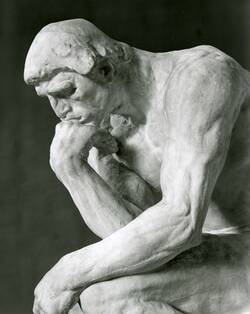
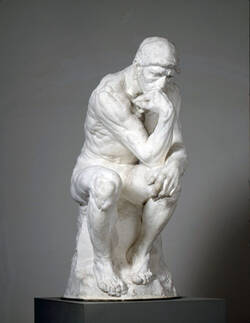
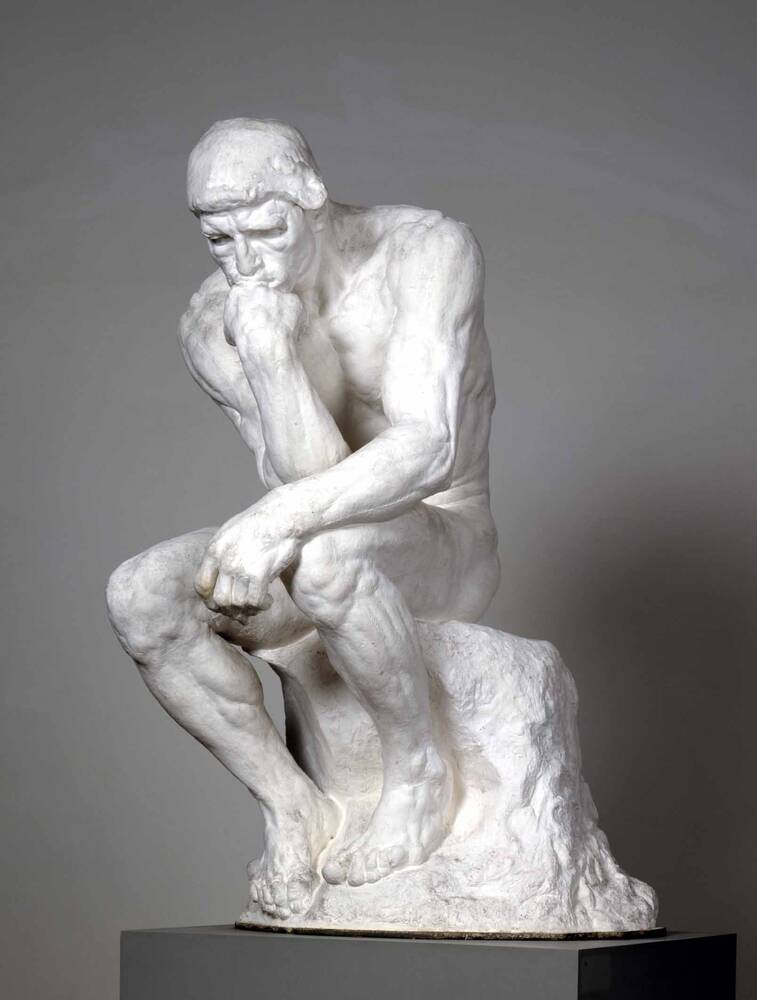
On a rock, a man is sitting still, motionless, totally absorbed in his thoughts. His brawny arms and legs tell a different story – perhaps a man of action, a fighter, possibly even a hero. So why has he sat down – and what absorbs him so deeply? And who is he? None of those questions are answered by the title of this work, which French sculptor Auguste Rodin simply called Le Penseur – ‘The Thinker’. A title only describing what we can see.
In 1880, Rodin was commissioned to design the monumental bronze doors for a planned new museum in Paris. His Thinker was intended for the lintel over the doors, so the figure would look down on the people entering the museum. The Thinker might also have been supposed to represent the poet Dante, often depicted wearing a similar style of hat. But the planned museum was never built. So Rodin took figures from his complex design for the doors and declared them as independent works – although outside their original context, their artistic message changed.
Here, Rodin addressed an intellectual crisis in his era. Until then, heroes were often a subject in art, figures who instinctively knew what was right and resolutely turned that conviction into action. This sculpture, though, shows just how difficult deciding on the right action can be. At the same time, Rodin highlights how, for the modern individual, reflection, mulling things over, may be the most important action – one even heroic in its own right.
Mužská postava sedíc na skále je hluboce zamyšlená. Výraz tváře svědčí o naprostém soustředění. Svalnaté tělo naznačuje, že se možná jedná o muže činu, bojovníka nebo snad i dokonce hrdinu. Ale proč na skálu usedl, o čem přemýšlí a - o koho se opravdu jedná? Název sochy nám o tom neposkytuje vlastně žádné informace. Francouzský sochař August Rodin nazval své dílo "Myslitel". Název tedy popisuje pouze to, co sami vidíme.
Roku 1880 byl Rodin pověřen návrhem portálu zdobeného sochami pro nové muzeum v Paříži. Socha "Myslitele" byla původně určena pro místo přímo nad vstupem, ze kterého se postava měla dívat dolů na vstupující návštěvníky. Možná také měla symbolizovat básníka Danteho. Muzeum však nebylo nikdy postaveno. Rodin proto sochy, původně určené pro portál muzea, zpracoval jako samostatná umělecká díla. Bez původního kontextu se jejich umělecká výpověď změnila.
Rodin zde tematizuje myšlenkovou krizi své doby. Doposud stáli v centru pozornosti umění především hrdinové: lidé, kteří jasně rozpoznali dobro od zla a kteří vykonali hrdinské skutky. Socha "Myslitele" nám však ukazuje muže, který se snaží vyřešit závažné dilema a najít odpověď na otázku, co je dobré. Rodin tak zdůrazňuje, že myšlení je pravděpodobně tím nejdůležitějším a téměř hrdinným lidským konáním, kterého je moderní člověk vůbec schopen.

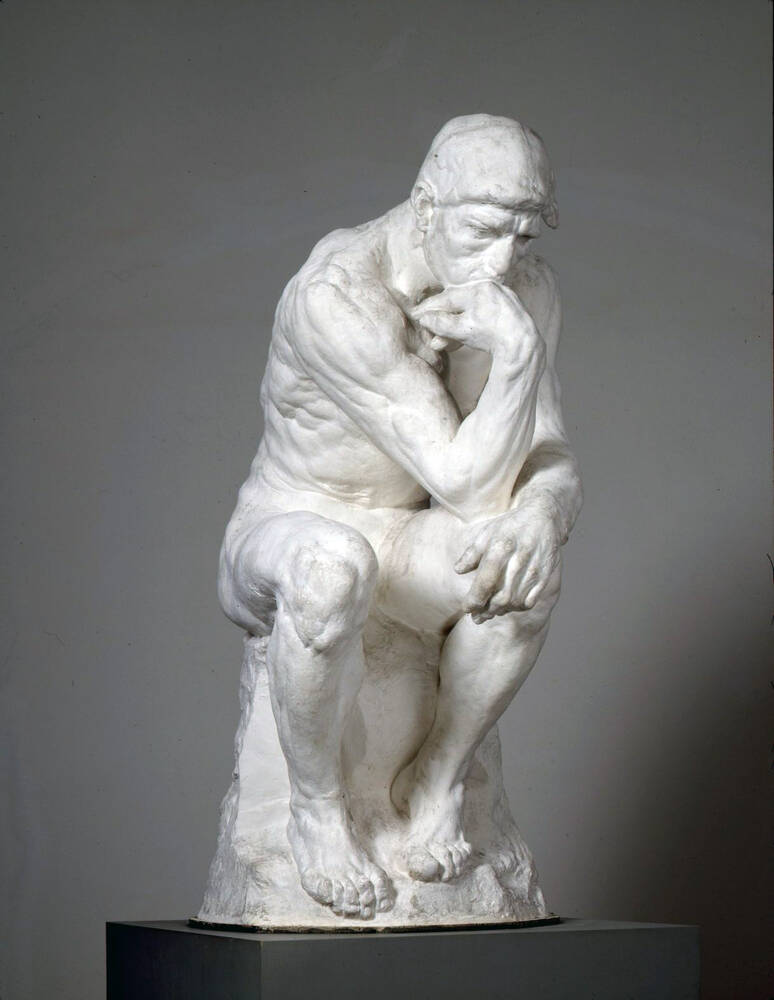
- Ort & Datierung
- 1881-1883 (Entwurf), 1903 (vergrößerte Fassung)
- Material & Technik
- Gips, aus der Stückform, Nähte einer früheren Formung erkennbar
- Dimenions
- H: 183,5 cm, B: 102,5 cm, T: 149,0 cm
- Museum
- Skulpturensammlung
- Inventarnummer
- ASN 4817