
Einen besonderen Einblick erhalten Sie in "Art for Lunch" mit Kerstin Küster:
Weitere Medien
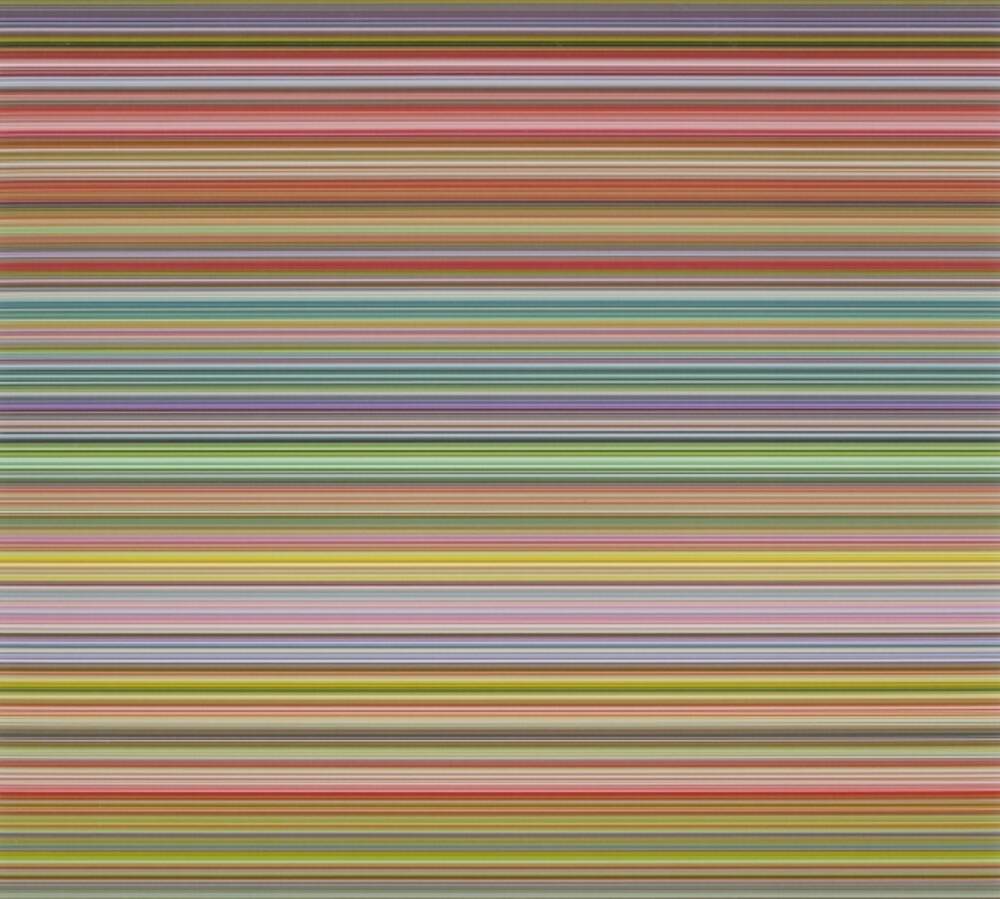
Images composed of very narrow strips of bright colours, precisely arranged. So precisely, you wonder if these could be painted by hand – though that would hardly be possible. Kerstin Küster, an expert on Gerhard Richter, explains the background to this series which was inspired by one of his own Abstract Paintings:
“This work is characterised by its very colourful appearance – so in comparison to his other Abstract Paintings at that time, it is a very colourful work using the entire spectrum of colour tones. Richter then digitised this abstract work.”
On a computer, Richter divided, reflected and repeated the digitised image, first by two, then four, eight, sixteen, and so on. And –
“... If you do that 4096 times, you end up with very, very narrow strips of colour.”
In a next step, Richter selected individual colour strips, lengthening them digitally before finally printing them out. The result looked very much like the finished strip pictures, but he was still not entirely happy with the result.
“So he had this strip picture as a small print – and then he did something which left his printers less than happy. He took a pair of scissors, cut the strips up, rearranged them and sent the new image back to the printers. From that model, they compiled a new digital image which was then printed in a seven colour process.”
So Richter’s strip pictures are actually prints created through a combination of coincidence and artistic design. An artist and a computer – working together as a team.
Pruhy. Velmi, velmi úzké pruhy v zářivých barvách, jeden přesně vedle druhého. Mohl je Richter namalovat sám od ruky? To sotva. Znalkyně Gerharda Richtera, Kerstin Küsterová popisuje, jak tato série vznikla. Výchozím bodem byla jedna z Richterových abstraktních olejomaleb:
„Toto dílo se vyznačuje svojí velikou barevností, to znamená, že ve srovnání s jinými abstraktními díly z této doby se jedná o velmi pestrý obraz, na němž najdeme všechny barvy. Richter svůj abstraktní obraz nejprve digitalizoval.“
Pak obraz na počítači opakovaně rozdělil na části: nejprve jen na dvě části, pak na čtyři, na osm, šestnáct a tak dále. Tyto části pak zrcadlil. A –:
„když to zopakujete 4096 krát, vzniknou velmi, velmi úzké proužky z barevných skvrn.“
Poté Richter vybral jednotlivé barevné pruhy a prodloužil je na počítači a nakonec je vytiskl. Výsledek už vypadal téměř jako hotové obrazy pruhů, ale umělec ještě nebyl spokojený:
„A pak Gerhard Richter dostal malý výtisk tohoto obrazu s pruhy a udělal něco, z čeho se v tiskárně příliš neradovali: Vzal nůžky a pruhy jednotlivě rozstříhal a složil je opět, ale v jiném pořadí, dohromady. Výsledek pak poslal zpět do tiskárny. Tam pruhy opět znovu sestavili na počítači a vytiskli pomocí sedmibarevného tisku.“
M U Richterových pruhovaných obrazů se tedy jedná o tisky, které vznikly kombinací náhody a uměleckého tvořivého procesu. Počítač a člověk – jeden tým.
- Ort & Datierung
- Köln 2012
- Material & Technik
- Digitaldruck auf Papier zwischen Alu Dibond und Perspex (Diasec)
- Dimenions
- 210 x 230 cm
- Museum
- Galerie Neue Meister
- Inventarnummer
- Inv.-Nr. 2013/28