
Das Paradies auf Erden lag für den Maler Carl Lohse in der sächsischen Kleinstadt Bischofswerda, die er in diesem Gemälde festgehalten hat. Wie es den geborenen Hamburger 1919 dorthin verschlug, erzählt die Kuratorin Birgit Dalbajewa:
„Carl Lohse gehört zu der Generation von Malern, die jung in den Krieg mussten. Als einziger seiner Kompanie überlebt er, als die Kompanie verschüttet wird. Als er endlich aus der Kriegsgefangenschaft entlassen war, war er zunächst mittellos, hätte nicht als Künstler existieren können, traf aber eine junge Frau, eine Malerin aus der kleinen sächsischen Stadt Bischofswerda. Die lud ihn ein. Er war dann Gast bei ihrer Schwester, die gut verheiratet war mit einem Fabrikanten, und konnte dort gut zwei sorglose Jahre lang geradezu im Rausch Bilder malen.“
In seinem Gemälde von Bischofswerda hat Lohse die Dresdner Straße ins Zentrum gerückt. Dort befand sich das Haus der Familie, bei der er zu Gast war:
„Die Stadt sieht man geradezu aufgefächert in einem Spektrum der verschiedenen Farbtemperaturen. Zum Zentrum hin in der Nähe des Hauses, wo die Familie lebte, wo er zu Gast war, wird es immer heißer von der Farbtemperatur, von einem glühenden Rot über ein leuchtendes Orange in ein gelb leuchtendes Zentrum fächert er diese kleine Stadt auf.“
1921 fand in Dresden Lohses erste Ausstellung statt. Die Kritiker waren von seinen eigenwillig-expressionistischen Gemälden begeistert, aber es fanden sich keine Käufer. Enttäuscht gab Lohse das Malen erst einmal auf. Erst Jahre später griff er wieder zu Pinsel und Palette.
Weitere Medien
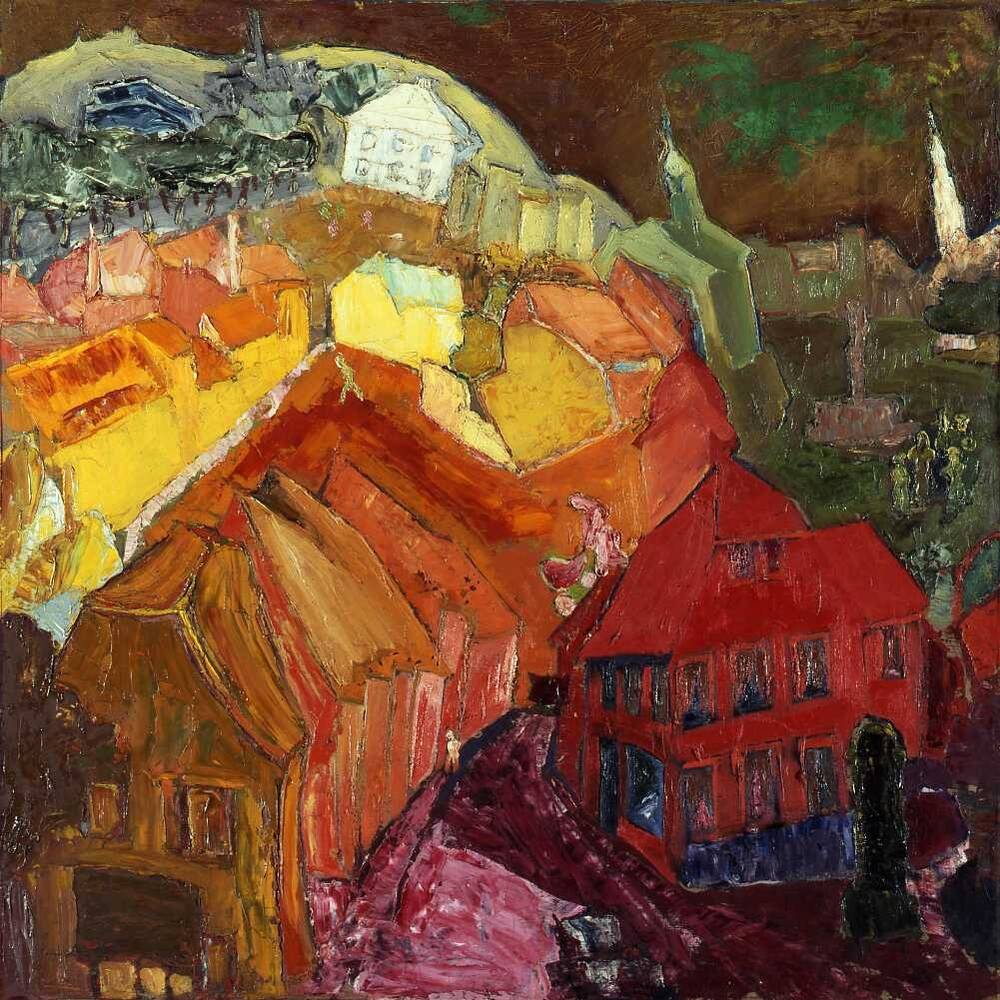
This painting by Carl Lohse depicts the small town of Bischofswerda – for the artist, a paradise on earth. Lohse was born in Hamburg – and curator Birgit Dalbajewa explains how came to live in a little town in Saxony.
“Carl Lohse belonged to that generation of male artists who had to go off to war as young men. In the Battle of the Somme, his company was buried when the trenches collapsed. Lohse was the only one to survive. Later, he was held as a prisoner of war. When finally released, he was initially destitute, and could never have lived as an artist – but then he met a young woman who was a painter. She came from Bischofswerda, a small town in Saxony, and invited him to stay there. The young woman’s sister was well-situated through her marriage to a factory owner, and Lohse became their house guest. He spent a good two years there, free from cares, painting like one possessed.
In the centre of his painting of Bischofswerda, Lohse set Dresdner Straße, the street with the house of the family where he was staying.
“We see the town rather like an unfolded fan in a spectrum of different colour temperatures. Towards the centre near the family’s house where he was staying, the colours become steadily more incandescent, and then he fans out this little town from the fiery red through a luminous orange to a bright yellow.”
Lohse’s first exhibition was held in 1921 in Dresden. The critics were thrilled by his idiosyncratic expressionist paintings, but his works did not sell. Carl Lohse was so disappointed he gave up painting. Only years later did he take up his artist’s palette and brushes again.
Pro malíře Carla Lohseho bylo rájem na zemi saské městečko Bischofswerda, které zachytil na tomto obraze. Jak se umělec, narozený v Hamburku roku 1919, dostal právě sem, vypráví kurátorka Birgit Dalbajewa:
„Carl Lohse patří ke generaci malířů, která během války musela jako velmi mladá nastoupit vojenskou službu. Jako jediný ze své roty přežil, když byli zasypáni po výbuchu. Když byl konečně propuštěn ze zajetí, byl zpočátku naprosto bez prostředků a nemohl se jako umělec uživit. Ale seznámil se s jednou mladou ženou, malířkou z malého saského městečka Bischofswerda, která ho pozvala. Lohse byl hostem její sestry, provdané za továrníka a tudíž dobře situované. Zde strávil dva bezstarostné roky a maloval téměř jako zběsilý jeden obraz za druhým.“
V centru obrazu Bischofswerdy zobrazil Lohse ulici se jménem „Dresdner Straße“, česky „Drážďanská ulice“. Tam se také nacházel dům rodiny, v níž byl hostem:
„Město se rozkládá před námi a jeho domy vlastně tvoří spektrum barev různých teplot. Směrem ke středu, poblíž domu, ve kterém žila rodina a kde byl hostem, teplota barev stoupá. Od žhnoucí červené přes zářivou oranžovou až po zářivě žlutou se za sebou řadí jednotlivé domy tohoto malého městečka.“
Roku 1921 se konala v Drážďanech Lohseho první výstava. Kritici byli jeho svéráznými expresionistickými obrazy nadšeni, ale obrazy nechtěl nikdo koupit. Zklamaný Lohse se vzdal malování a teprve po letech se opět chopil štětce a palety.
- Ort & Datierung
- 1920
- Material & Technik
- Mischtechnik auf Leinwand
- Dimenions
- 98 x 98 cm (Katalogmaß 2010) 98,5 x 98 cm (Inventurmaß, 27.04.2010) 113 x 112,3 x 4 cm (Rahmenmaß, Tobias Lange, 27.04.2010)
- Museum
- Galerie Neue Meister
- Inventarnummer
- Gal.-Nr. 3683