
Der Dresdner Wilhelm Lachnit zählt zu den Künstlern der Neuen Sachlichkeit – Maler, die die soziale Wirklichkeit nüchtern und unverbrämt darstellen wollten. 1926 hat er diese junge Frau im Pelz porträtiert. Mit ihren kurzen Haaren entspricht sie der "Neuen Frau" der Zwanziger Jahre, die erstmals ihr Leben selbst bestimmte, die studieren und neue Berufe ergreifen konnte. Lachnits Modell, so die Kuratorin Birgit Dalbajewa, war eine Künstlerkollegin, die Fotografin Maria Tokewa,
"die vielleicht in seinem Atelier sogar einen alten Pelz, wie man ihn oft hatte in Ateliers, wo man Pelzmalen üben musste, übergestülpt hatte, weil es vielleicht kalt war im Atelier, die Künstler waren wirklich nicht sehr bemittelt finanziell."
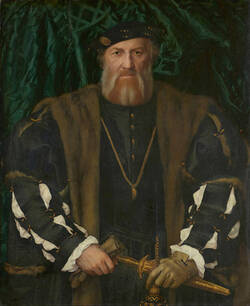
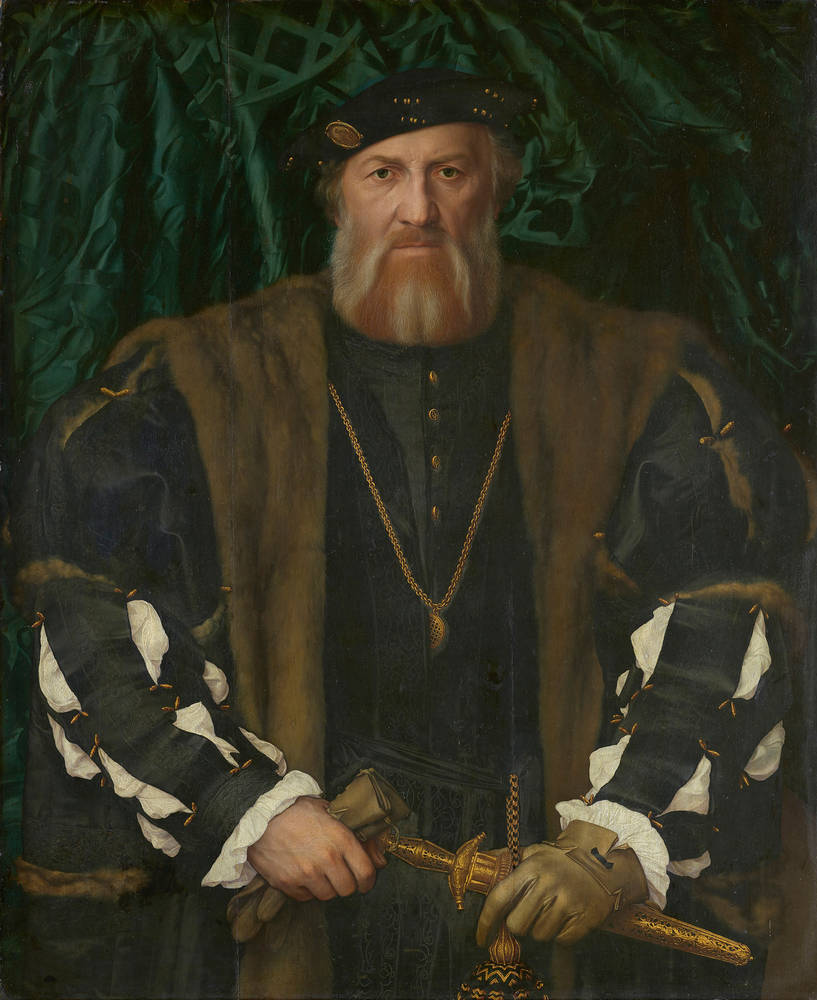
Die ernste, junge Frau in dem voluminösen Pelz, der eigentlich zu groß für sie ist – ein reizvolles Motiv, das überdies an die Alten Meister erinnert. Wie viele Künstler der Neuen Sachlichkeit orientierte sich auch Lachnit an ihren Werken. Das "Mädchen mit Pelz" ist, wenn man so will, das "Remake" eines rund 400 Jahre älteren Gemäldes von Hans Holbein dem Jüngeren, das Lachnit aus der Dresdner Galerie der Alten Meister kannte. Holbein zeigt dort einen vornehmen Herrn in einer Pelzweste vor einem Hintergrund aus grünschimmerndem Samt:
"Also dieser Klang: Pelz vor einem Dunkelgrün und ein leuchtendes helles Inkarnat, eine Hautfarbe dazwischen, das ist eine Idee von Alten Meistern. Man muss sich das ja nicht so vorstellen, dass ein Bild 1 zu 1 rezipiert worden ist. Aber so einen Farbklang, der in der Malerei der Alten Meister so bekannt war, der wird aufgenommen und wird in einem so modernen Bild der 20er Jahre verarbeitet."
Vergleichsbild: Hans Holbein d. J., Charles de Solier, Sieur de Morette
Weitere Medien
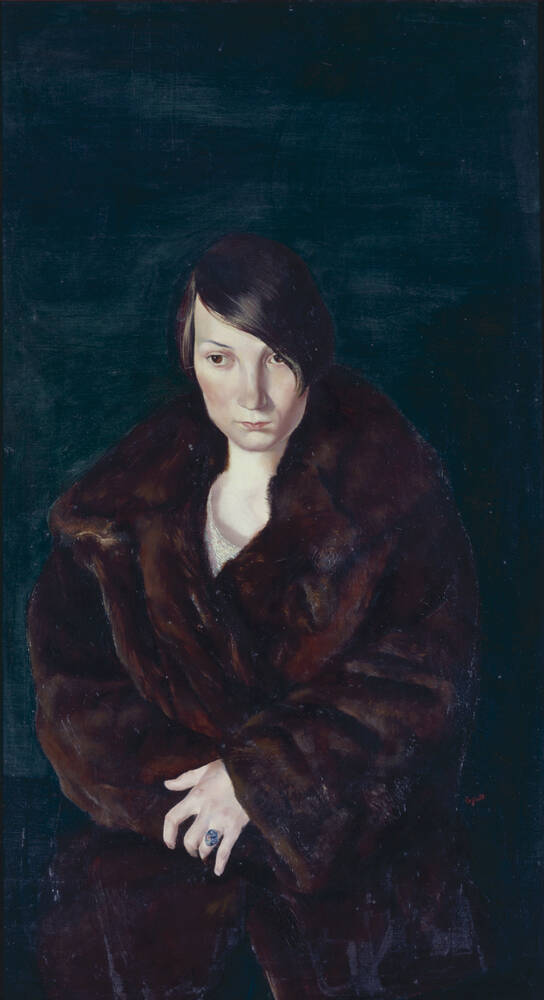
Born close to Dresden, artist Wilhelm Lachnit became part of the New Objectivity movement, which aimed at reflecting social reality in factual and unvarnished images. In 1926, Lachnit painted this young woman in a fur coat. With her bobbed hair, she embodies the ‘New Woman’ of the 1920s. For the first time, women could decide for themselves how they lived, could study and take up professions previously closed to them. As curator Birgit Dalbajewa tells us, Lachnit’s model was a fellow artist – the photographer Maria Tokewa,
“...Possibly she had simply slipped on the coat in his studio – after all, many artists’ studios had an old fur coat if they had to practice painting furs. But perhaps she just wore it because it was cold – the artists really didn’t have a lot of money.”
In her voluminous fur coat, clearly far too big for her, the serious young woman is an attractive subject – and also resonates with works by canonical artists from the Renaissance on. Just like many artists in the New Objectivity movement, Lachnit also took that canon of art as a point of reference. From that perspective, Lachnit’s Girl in a Fur Coat is a new version of a painting by Hans Holbein the Younger from around 400 years earlier, a work which Lachnit knew from the Dresden Old Masters collection. In his painting, Holbein shows an elegant man in a chamarre, an unbelted coat with very wide arms and a fur lining, set against a shimmering green velvet background:
“So there is a resonance – the fur set off against dark green, with the bright skin colour in between, that’s an idea you find in Old Master paintings. It would be wrong, though, to imagine a work merely being copied one-to-one. Here, the tonality, so well-known from canonical paintings, is taken up and reworked in a modern 1920s picture.”
Drážďanský Wilhelm Lachnit je umělcem, který se snažil střízlivě a nezkrášleně zobrazit sociální realitu, a byl jedním z umělců skupiny "Nová věcnost". Roku 1926 portrétoval tuto mladou ženu v kožichu, jejíž krátké vlasy odpovídají stylu "nové ženy" ve dvacátých letech minulého století. Ženy tenkrát mohly vzít poprvé život do svých rukou, mohly studovat a pracovat v nových povoláních. Jak nám vypráví kurátorka Birgit Dalbajewa, stála Lachnitovi modelem jeho umělecká kolegyně, fotografka Maria Tokewa,
"která do kožichu možná jen rychle vklouzla, v ateliérech bylo totiž možné najít kožichy jako studijní materiál poměrně často, protože jí byla v ateliéru zima. Umělci tenkrát na tom opravdu finančně nebyli zrovna nejlépe."
Mladá a zamyšlená, vážná dívka v mohutném kožichu, který jí je vlastně příliš velký - půvabný motiv, který nám připomíná malby starých mistrů. Stejně jako velká část umělců "Nové věcnosti" nechal se také Lachnit inspirovat jejich díly. "Dívka s kožichem" je, dá se říci, novou verzí díla od Hanse Holbeina mladšího, které vzniklo před více než 400 lety a které Lachnit znal z drážďanské galerie starých mistrů. Na Holbeinově malbě vidíme vznešeného muže v kožešinové vestě a v pozadí zeď obloženou zeleným třpytivým sametem.
"Tedy tato hra s barvami a materiály: Kožich před tmavě zelenou a mezitím jasná, světlá barva pleti, to je kombinace známá z malby starých mistrů. Není tím hned myšleno, že starý obraz ovlivnil 1 ku 1 obraz nový, umělec ale převzal ideu obrazu a zpracoval ji moderním způsobem typickým pro 20tá léta."
- Ort & Datierung
- 1925/26
- Material & Technik
- Öl auf Leinwand
- Dimenions
- 120,5 x 67,5 cm (Katalogmaß 2010) 120 x 67 cm (Katalogmaß) 120,5 x 67,5 cm (Inventurmaß, 01.12.2010) 133,4 x 81 x 3,7 cm (Rahmenmaß, Tilman Heitmann, 01.12.2010)
- Museum
- Galerie Neue Meister
- Inventarnummer
- Gal.-Nr. 2614