
Constantin Meunier war der erste Bildhauer, der sich mit dem Schicksal der hart arbeitenden Bevölkerung im Medium der Skulptur auseinandersetzte. Das Thema gab es vorher nur in der Malerei. Der belgische Künstler empfand große Sympathie für den Arbeiter. 1902 schrieb er in einem Brief:
„Er verdient unsere Aufmerksamkeit und wird doch oft aufs Abscheulichste ausgebeutet – ich halte die Arbeit für ehrenwert genug, um verherrlicht zu werden“.
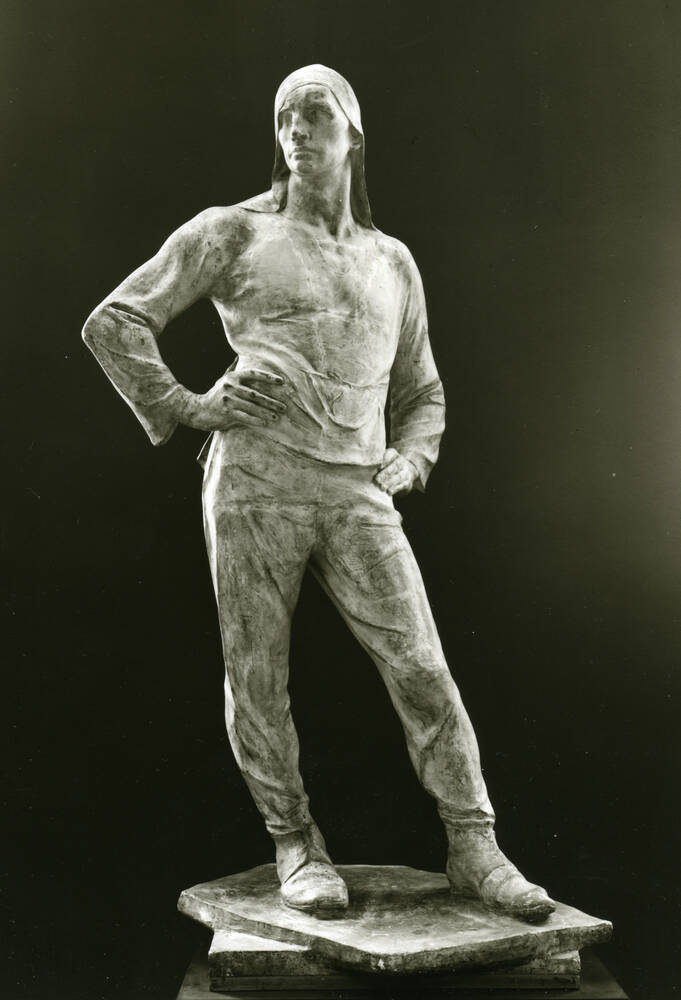
Und so zeigt er seinen Lastträger in selbstbewusster Haltung, aufrecht und kraftvoll wie einen Athleten – und nicht wie einen schwer vom Schicksal Gebeutelten. Dabei war diese Arbeit extrem hart und schlecht bezahlt. Tag für Tag mussten die Lastträger im Hafen von Antwerpen schwere Säcke schleppen. Nur eine dünne Kapuze schützte Schulter und Nacken.
Haltung und Körperbau des Mannes orientieren sich an der idealisierten Ästhetik antiker Skulpturen. Kleidung und Schlichtheit im Ausdruck aber holen den Arbeiter in die raue Gegenwart Ende des 19. Jahrhunderts.
Bronzeplastiken des „Lastträgers“ stehen heute in mehreren europäischen Städten. Diesen Gipsabguss brachte Georg Treu einst nach Dresden. Kuratorin Astrid Nielsen:
„1898 war es Georg Treu, der Direktor der damaligen Skulpturensammlung, der die erste Monografie über Constantin Meunier publizierte. Er war sozusagen der Entdecker des belgischen Künstlers als Bildhauer, weil er viele, eine große Anzahl von Werken, etwas über 60, als Sonderausstellung integrierte in die erste internationale Kunstausstellung 1897 in Dresden, die neue Maßstäbe setzte zur Präsentation von zeitgenössischer Kunst. Deswegen war Constantin Menuier Georg Treu sehr verbunden und der Bestand an Werken des belgischen Künstlers ist auch umfangreich.“
Weitere Medien
Belgian artist Constantin Meunier was the first sculptor to take the fate of industrial workers as his subject – a topic previously only addressed in painting. He was very sympathetic to the lives of ordinary working people. In 1902, he wrote in a letter:
“[... The worker... ] is worthy of our attention and is often most horribly exploited – I consider the work honourable enough to be glorified.”
And so he shows his porter in a self-confident pose, as upright and powerful as an athlete – and not someone buffeted by fate and life’s vicissitudes. Yet a porter’s work was extremely hard and poorly paid. Day after day, the porters in Antwerp harbour had to lug heavy sacks, with only a thin hood to protect their shoulders and neck.
Although the porter’s physique and posture is informed by the idealised beauty of classical sculpture, his garments and the simplicity of his appearance locate him firmly in the harsh realities of life at the end of the nineteenth century.
Today, bronze sculptures of Meunier’s Porter are on show in many European cities. It was Georg Treu who brought this plaster cast to Dresden. Curator Astrid Nielsen:
“In 1898, Georg Treu, then Director of the Sculpture Collection, published the first monograph on Constantin Meunier. He was, as it were, the one who discovered this Belgian artist as a sculptor, since he integrated a large number of his works, around 60 in total, as a special exhibition in the first International Art Exhibition in Dresden in 1897 – a show which set new standards in presenting contemporary art. That’s why Constantin Meunier also felt indebted to Georg Treu and also why the Albertinum has such comprehensive holdings of Meunier’s works.”
Belgian artist Constantin Meunier was the first sculptor to take the fate of industrial workers as his subject – a topic previously only addressed in painting. He was very sympathetic to the lives of ordinary working people. In 1902, he wrote in a letter:
“[... The worker... ] is worthy of our attention and is often most horribly exploited – I consider the work honourable enough to be glorified.”
And so he shows his porter in a self-confident pose, as upright and powerful as an athlete – and not someone buffeted by fate and life’s vicissitudes. Yet a porter’s work was extremely hard and poorly paid. Day after day, the porters in Antwerp harbour had to lug heavy sacks, with only a thin hood to protect their shoulders and neck.
Although the porter’s physique and posture is informed by the idealised beauty of classical sculpture, his garments and the simplicity of his appearance locate him firmly in the harsh realities of life at the end of the nineteenth century.
Today, bronze sculptures of Meunier’s Porter are on show in many European cities. It was Georg Treu who brought this plaster cast to Dresden. Curator Astrid Nielsen:
“In 1898, Georg Treu, then Director of the Sculpture Collection, published the first monograph on Constantin Meunier. He was, as it were, the one who discovered this Belgian artist as a sculptor, since he integrated a large number of his works, around 60 in total, as a special exhibition in the first International Art Exhibition in Dresden in 1897 – a show which set new standards in presenting contemporary art. That’s why Constantin Meunier also felt indebted to Georg Treu and also why the Albertinum has such comprehensive holdings of Meunier’s works.”
- Ort & Datierung
- 1893
- Material & Technik
- Gips
- Dimenions
- H: 210 cm, B: 130 cm, T: 80 cm Gewicht: ca. 60 kg
- Museum
- Skulpturensammlung
- Inventarnummer
- ASN 5043