
Man rühmte ihre "leidenschaftliche Natur" und ihren "sprühenden Geist": Im Jahr 1818 saß Wilhelmine Benigna Biron, Herzogin von Sagan, dem dänischen Bildhauer Bertel Thorvaldsen für diese Porträtbüste Modell – nicht etwa in Dänemark, sondern in Rom, das sie im Verlauf einer Italienreise besuchte.
Thorvaldsen war zu dieser Zeit knapp 50 Jahre alt und ein berühmter klassizistischer Bildhauer. Seit mehr als 20 Jahren lebte er in der Ewigen Stadt, die er als junger Stipendiat kennengelernt hatte. Aus ganz Europa strömten damals Künstler nach Rom und ließen sich von den antiken Originalen inspirieren. Mit seinen Werken machte sich der junge Thorvaldsen rasch einen Namen. Im Lauf der Zeit konnte er eine imposante Werkstatt aufbauen, mit bis zu 40 Angestellten:
"Es gehörte zu einer touristischen Attraktion, sein Atelier zu besuchen; jeder Romreisende durfte nicht wieder abreisen, ohne Thorvaldsen in seinem Atelier besucht zu haben."
So die Kuratorin Astrid Nielsen. In der Werkstatt konnten die Besucher Repliken von Thorvaldsens Werken bestellen. Neue Aufträge wie die Porträtbüste der Wilhelmine Biron modellierte der Meister persönlich in Ton oder Gips; die Ausarbeitung in Marmor überließ er den Angestellten. Thorvaldsen gestaltete die Büste ausgewogen und schlicht im Stil des Klassizismus, der die Kunst der Antike gewissermaßen neu erschuf:
"Man orientierte sich an der Antike, das heißt aber nicht, dass man nur nachahmte, sondern man versuchte, die Antike sozusagen neu zu empfinden. Oder zu erschaffen. Wichtig war es vor allen Dingen, eine gewisse Schönlinigkeit zu erreichen, Anmut und Grazie den Werken zu verleihen und natürlich war auch der Umgang mit dem weißen, reinen Marmor von großer Bedeutung. Und alle diese Ideale findet man letztendlich in diesem Porträt der Wilhelmine Benigna Biron wieder."
Weitere Medien
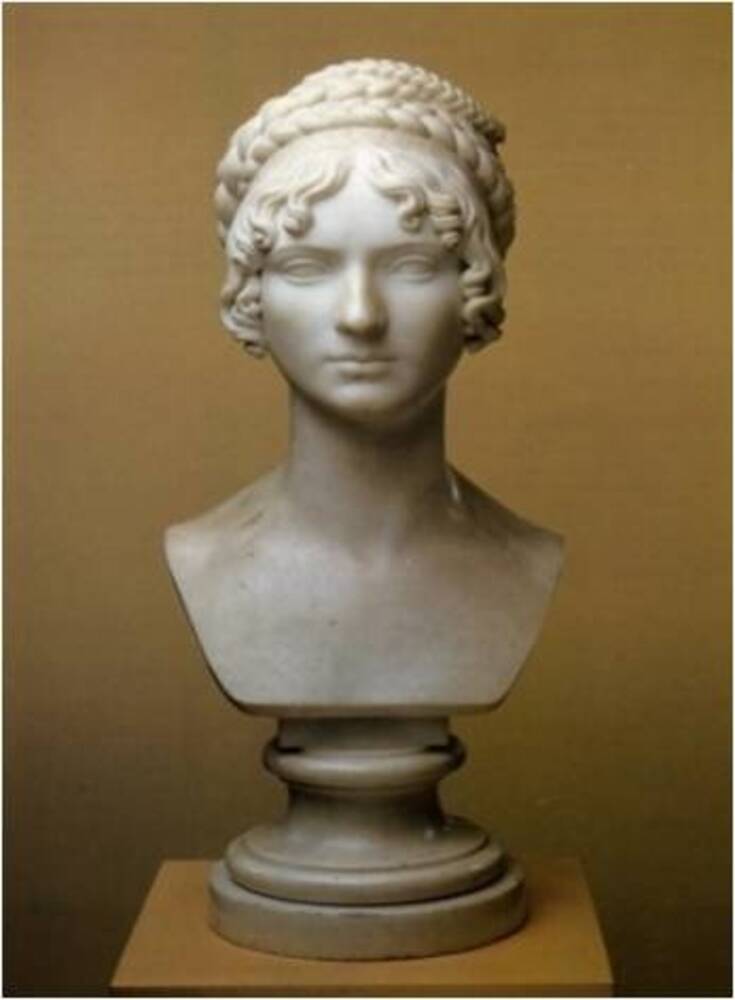
Wilhelmine Benigna Biron, Duchess of Sagan, was renowned for her “passionate nature” and “sparkling wit”. In 1818, she sat for this portrait bust by Danish sculptor Bertel Thorvaldsen – though not in Denmark, but in Rome where she was staying on a trip to Italy.
Thorvaldsen was a famous neo-classical sculptor. Just under 50 years old, he had moved to Rome on a scholarship over twenty years before, and made the city his home. In those days, artists from across Europe flocked to Rome to be inspired by the original works of art from antiquity. The young Thorvaldsen quickly made a name with his sculptures. Over the following years, he established an impressive workshop employing up to 40 assistants. Curator Astrid Nielsen:
“It became one of Rome’s tourist attractions – and no traveller worth their salt would leave the city without having visited Thorvaldsen in his studio.”
In the workshop, visitors could then order copies of the sculptor’s works. When he had new commissions, such as Wilhelmine Biron’s portrait bust, he modelled the piece personally in clay or plaster, and then his assistants carved the bust in marble. Thorvaldsen’s composition for the bust was simple and balanced, perfectly in keeping with the neo-classical style which, to an extent, recreated the art of antiquity:
“Artists sought to emulate the classical world – which doesn’t they merely copied those works. Instead, they sought, as it were, to reinvent or recreate antiquity in a new “true” style. Above all, the aim was to achieve a certain beauty of line, to lend the works charm and grace. Of course, the way the pure white marble was treated was also crucial. Ultimately, all these ideals can be found in this portrait bust of Wilhelmine Benigna Biron.”
Ve své době byla známá díky své „vášnivé povaze“ a „jiskřivému duchu“: Vilemína Benigna Biron, vévodkyně Zaháňská, roku 1818 seděla modelem dánskému sochaři Bertelu Thorvaldsenovi – avšak ne v Dánsku, nýbrž v Římě, který během své cesty po Itálii navštívila.
Tehdy téměř 50ti letý Thorvaldsen byl slavným klasicistním sochařem a ve Věčném městě, které poznal jako mladý stipendista, žil více než 20 let. Do Říma se v té době sjížděli umělci z celé Evropy a hledali inspiraci u antických originálů. Mladý Thorvaldsen se rychle proslavil a postupem času se mu podařilo vybudovat velký ateliér, kde dočasně zaměstnával až 40 zaměstnanců:
„Návštěva jeho ateliéru patřila k turistickým atrakcím; každý návštěvník nesměl Řím opustit, aniž by navštívil Thorvaldsenův ateliér.“
Vypráví kurátorka Astrid Nielsenová. Návštěvníci si v ateliéru mohli objednat kopie Thorvaldsenových děl. Nové zakázky, jako například portrétní bustu Vilemíny Benigny Zaháňské, mistr sám vymodeloval z hlíny nebo sádry. Vypracování v mramoru pak přenechal svým zaměstnancům. Thorvaldsen vypracoval portrét vyváženě a jednoduše ve stylu klasicismu, který se v podstatě snažil obnovit antické umění:
„Antická díla sloužila sice jako předloha, ale to neznamená, že byla pouze napodobována. Umělci se spíše snažili do antiky takříkajíc nově vcítit. Nebo ji vytvořit. Důležité bylo především dosáhnout krásy linií a propůjčit novým dílům půvab a grácii. Velmi důležitý byl samozřejmě také čistě bílý mramor. A všechny tyto ideály lze konec konců nalézt i v našem portrétu Vileminy Benigny Zaháňské.“
- Ort & Datierung
- 1818/19
- Material & Technik
- Marmor
- Dimenions
- H: 62,0 cm, B: 26,0 cm, T: 24,0 cm
- Museum
- Skulpturensammlung
- Inventarnummer
- ZV 3109