Mein Name ist Anne Jähnichen. Ich bin im Albertinum als Museumsaufsicht, Besuchermanagerin und an der Kasse tätig. Für unsere Gäste sind wir die ersten Ansprechpartner, wenn es um Fragen rund um den Museumsbesuch, Sonderausstellungen und Veranstaltungen geht. Natürlich haben wir sicherheitsrelevante Fragen im Blick, um allen Gästen einen angenehmen Aufenthalt zu ermöglichen und die Kunst zu schützen.
"Ich heiße Michael Ensel und bin im Museum vorwiegend als Besuchermanager oder an der Kasse eingesetzt und natürlich auch als Museumsaufsicht.
Wir sind beide jetzt schon gut 12 Jahren hier. Und insofern würde ich auch gern eine Einladung an jeden Gast aussprechen, uns bei auftretenden Fragen oder was immer sie gerade bewegt, sich gerne an uns zu wenden."
Anne Jähnichen und Michael Ensel arbeiten sehr gerne im Albertinum. Das wird sofort deutlich, wenn sie über die Atmosphäre im Haus sprechen und über Werke, die ihnen besonders viel bedeuten.
"Das Haus strahlt eine große Offenheit aus, die man auch, wenn man hier im Haus ist,spürt, also das ist auch irgendwie auch ein Ort des Seins und des Miteinanders. Es gibt bestimmte Werke, die ich sehr mag. Ich mag die Gemälde von Caspar David Friedrich, auch aufgrund der hohen Sensibilität, mit der diese Werke maltechnisch umgesetzt sind. Ich finde aber auch zeitgenössische Positionen wie Gerhard Richter sehr spannend."
Und Michael Ensel?
"Da muss ich definitiv Otto Dix nennen. Und zwar das Kriegs-Triptychon, von dem man sich natürlich wünschen würde, dass es irgendwann mal an Aktualität verliert, was leider nicht so ist. Aber auch die weiteren Werke, unter anderem „Sehnsucht“, sind mir ganz nah. Räumlich finde ich atmosphärisch auch den Klinger-Saal besonders gelungen in diesem Zusammenspiel von Skulptur und Gemälden. Und eine Sache, die ich vielleicht noch anmerken möchte… Kehinde Wiley im Mosaiksaal. Das sind immer die Punkte, wo dieser rein chronologische Fortlauf durchbrochen wird mit einer modernen Position."
Ein ganz besonderer Ort wurde nach dem großen Umbau 2010 geschaffen: der überdachte Lichthof. Für Anne Jähnichen ein wunderbarer Ort der Begegnung und des interkulturellen Austausches. Und ihr Kollege sagt:
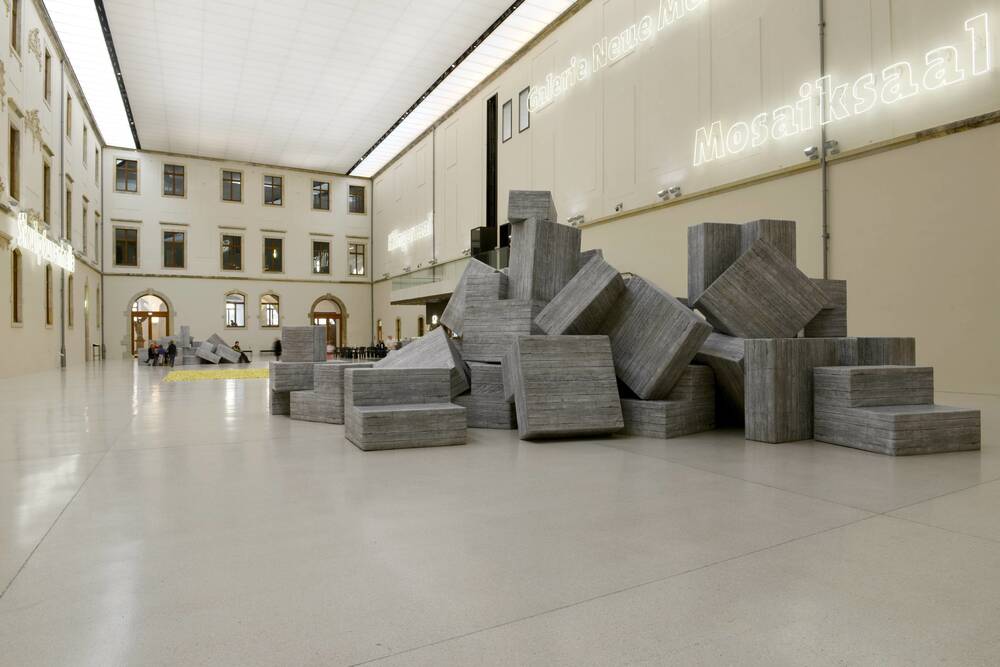
"Da ich ja auch häufig als Besuchermanager tätig bin, ist so der Lichthof mein natürlicher Lebensraum, und, ja, der ist einfach insofern wundervoll, weil an der einen Stelle, an den ABC-Tischen, Menschen unterschiedlichster Herkunft die deutsche Sprache erlernen, direkt daneben spielt eine Familie Tischtennis. Und andere sitzen mit ihren Kindern auf „Demos“ und lesen vor."
„Demos“ ist eine Installation des Künstlers Andreas Angelidakis, die von den Besuchern nach Lust und Laune umgebaut werden darf.
"Da habe ich vielleicht ein Beispiel zu. Ein kleiner Junge aus einer Schulklasse, die kürzlich da war. Nachdem die Veranstaltung des Lernorts zu Ende war, war klar, die dürfen noch mal mit Demos bauen. Und dann ging da so eine Dynamik rein und irgendwann stand er da und hat zu mir gesagt: Sag mir doch mal ein Museum, wo man sowas darf! Und ich sagte: Empfehl uns einfach weiter. Und da kam er später noch mal: Ich empfehl das weiter!"
Weitere Medien
My name is Anne Jähnichen. I’m a museum assistant in the Albertinum, with duties as a warder in the galleries, a visitor manager and on the ticketing desk. We are the first port of call when visitors have questions about the museum, special exhibitions or events. Naturally, we keep an eye on security-related issues, not just to protect the art works but also to ensure all our guests can enjoy a pleasant visit to the museum.
I’m Michael Ensel and mostly work in the museum as a visitor manager or on the ticket desk. Of course, I also work as a warder in the galleries.
We've both been working here for a good 12 years now. From that perspective, I’d also like to invite all our visitors not to hesitate to ask us if they have any questions, or need to know some particular information – we’re always here for them.
Anne Jähnichen and Michael Ensel enjoy working in the Albertinum, as is immediately clear when they talk about the atmosphere here, and the art works that mean a lot to them.
The Albertinum has an amazing openness, something you also sense when you’re in the museum – in other words, this is somehow a vibrant, living place and a space for encounters. There are some works I really like, for instance, Caspar David Friedrich’s paintings, especially because of his profound sensitivity in painting the scenes. I think contemporary positions such as Gerhard Richter are very interesting as well.
And Michael Ensel?
I’d certainly want to mention Otto Dix, especially his War triptych. Of course, you’d hope a work like that would cease to be topical at some point, but unfortunately that’s not the case. He also painted other works which touch me, for example, Sehnsucht - ‘Longing’. In terms of space, I think the atmosphere in the Klinger Hall, with its interplay of sculptures and paintings, is especially successful. And there’s perhaps another work I’d like to mention … Kehinde Wiley in the Mosaic Hall. Those are points where a modern position interrupts a purely chronological narrative.
The major refurbishment in 2010 created a very special space – the covered atrium. For Anne Jähnichen, this is a wonderful place of encounters and intercultural exchange. And her colleague adds:
As I’m often working as a visitor manager, the atrium is my natural habitat. And yes, it’s simply wonderful since in one place you find people at the ABC desks from very different countries learning German, and then there’s a family playing table tennis directly next to them. And other people are sitting with their children on the Demos installation and reading.
Demos is a modular installation by the artist Andreas Angelidakis, and it can be rebuilt by visitors just as they like.
I could maybe give you an example of that – a young boy from a school class that visited recently. After the museum’s educational session was over, the children knew they could rebuild the Demos modules again. So they went to it with quite a burst of energy, and at some point the young boy stood there and said to me: D’you know any museum where you can do something like this! And so I said, Recommend us to others. Later, he came back and said: I’m sure going to recommend the museum to others!
Jmenuji se Anne Jähnichenová. V Albertinu pracuji jako dozorkyně, manažerka návštěv a také u pokladny. Pro naše návštěvníky jsme první kontaktní osobou, pokud jde o otázky týkající se návštěvy muzea, speciálních výstav a akcí. Samozřejmě dohlížíme také na bezpečnost, abychom všem hostům zajistili příjemný pobyt a chránili umělecká díla.
Jmenuji se Michael Ensel a v muzeu pracuji především jako manažer návštěv nebo u pokladny a samozřejmě také jako dozorce v muzeu.
Oba tu pracujeme už dobrých 12 let. A proto můžu všem návštěvníkům srdečně doporučit, aby se na nás obrátili, pokud mají nějaké dotazy k čemukoli, co je právě zajímá.
Anne Jähnichen a Michael Ensel pracují v Albertinu velmi rádi. To je hned poznat, když vyprávějí o atmosféře v muzeu a o dílech, která jsou pro ně obzvlášť důležitá.
Budova vyzařuje velkou otevřenost, kterou člověk cítí, když se zde nachází. Je to vlastně také určitým způsobem místo bytí a pospolitosti. Určitá díla, která tu visí, se mi obzvlášť líbí. Mám ráda obrazy Caspara Davida Friedricha, a to také kvůli vysoké pečlivosti, s jakou jsou tato díla technicky realizována. Ale velmi vzrušující jsou pro mě i díla současných umělců, jako například Gerhard Richter.
A Michael Ensel?
Já musím rozhodně zmínit Ottu Dixe. A sice jeho válečný triptych, u kterého by si člověk samozřejmě přál, aby někdy konečně ztratil na aktuálnosti, což se bohužel dosud nestalo. Ale i další díla, jako například „Touha“, jsou mi velmi blízká. Dále se mi také velmi líbí Klingerův sál a jeho prostor se zdařenou souhrou soch a obrazů. A ještě jednu věc bych velmi rád zmínil ... Kehinde Wiley v sále s mozaikami. To jsou vždy ta místa, kde nějaké moderní dílo a pozice ruší jinak čistě chronologický průběh.
Během rozsáhlé rekonstrukce roku 2010 vzniklo velmi zvláštní místo: zastřešené atrium. Pro Anne Jähnichenovou je to nádherné místo pro různá setkání a rozhovory mezi různými kulturami. Její kolega říká:
Protože tu jsem také často ve funkci manažera návštěv, je atrium mým přirozeným působištěm, a ano, je to opravdu úžasný prostor: Na jednom místě, u stolů ABC, se učí lidé z nejrůznějších zemí německy; zároveň hned vedle hraje jiná rodina stolní tenis. A další rodiče sedí se svými dětmi na „Demos“ a nahlas jim předčítají.
„Demos“ je instalace řeckého umělce Andrease Angelidakise, kterou návštěvníci smějí přestavovat podle svých představ.
K tomu mám jeden příklad: malého školáka, který tu byl nedávno se svou třídou. Poté, co akce ve výukovém centru skončila, bylo jasné, že děti ještě můžou z modulů něco postavit. Přitom pak vznikla velká dynamika a ten kluk stál najednou přede mnou a povídá: Řekni mi prosím tě nějaké muzeum, kde se něco takového smí! Já jsem mu odpověděl: No tak nás můžeš doporučit dál. A on se pak později vrátil a prohlásil: Já vás opravdu doporučím dál!