
Further Media
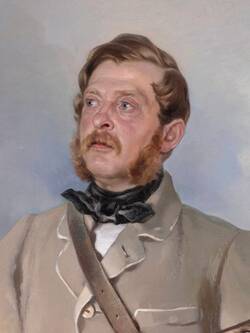
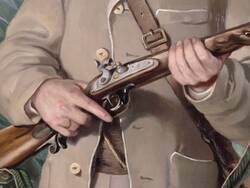
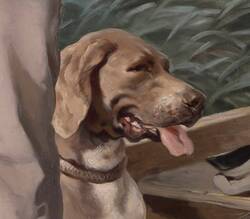
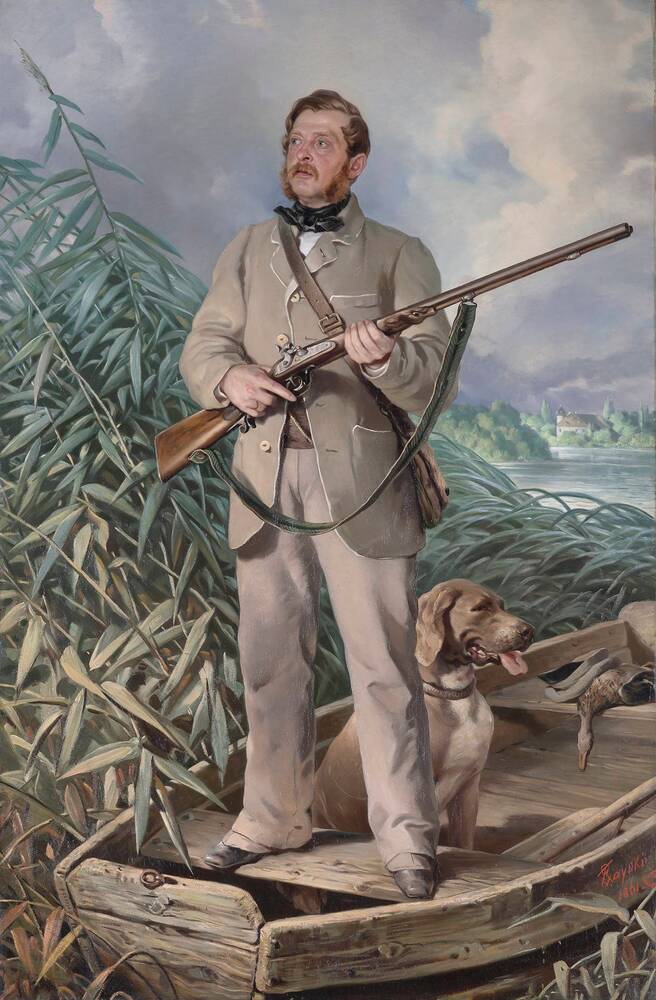
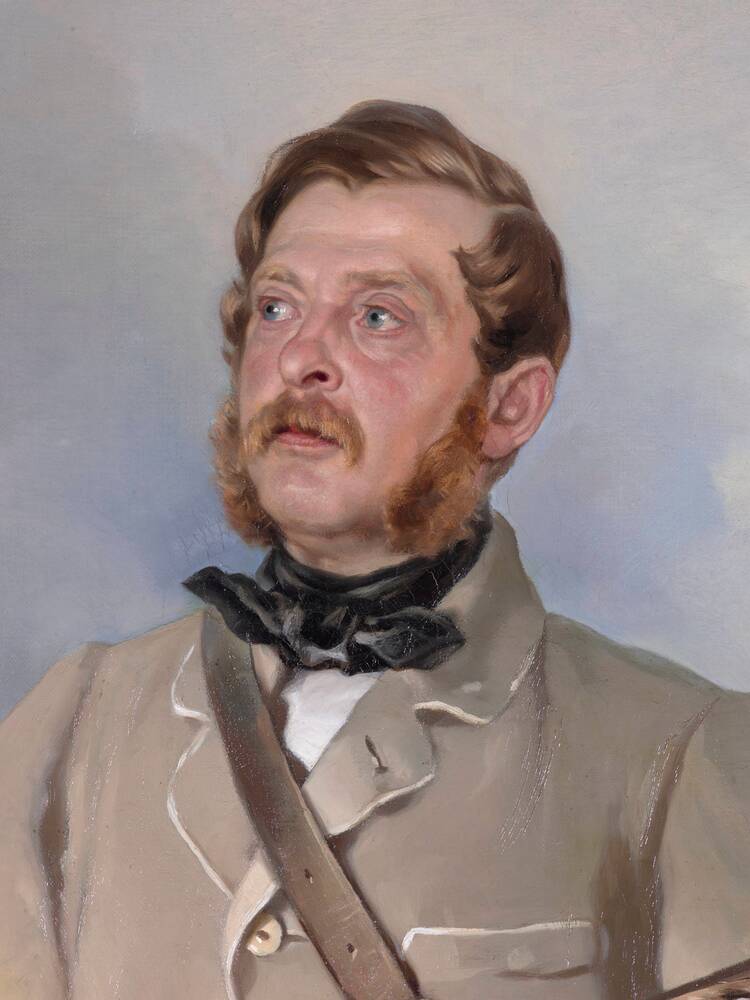
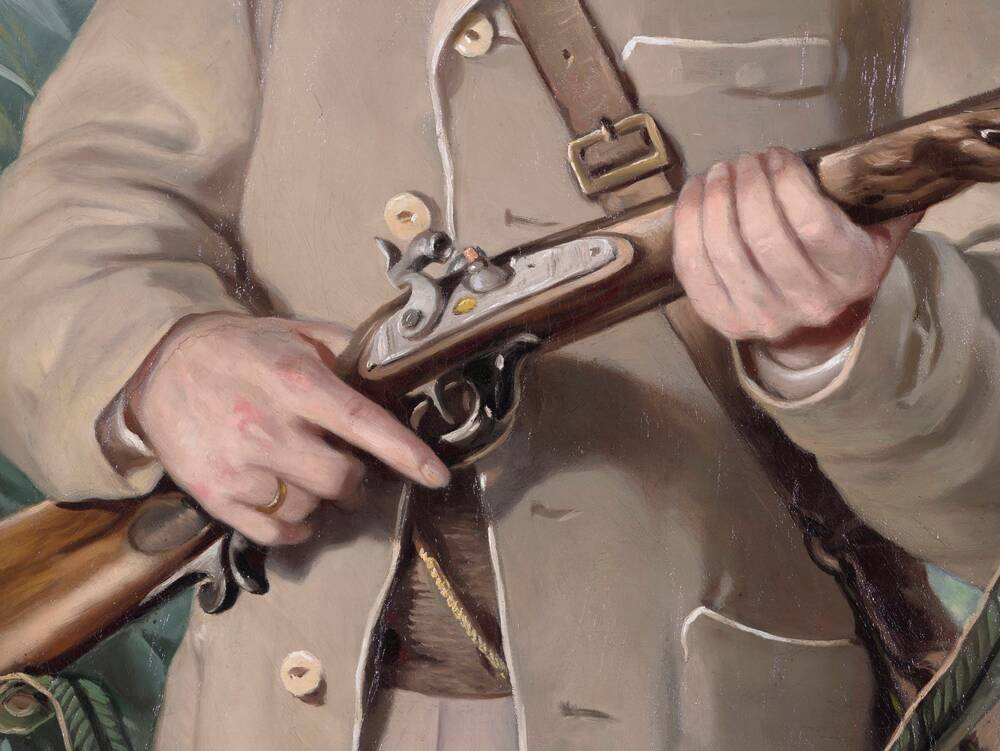
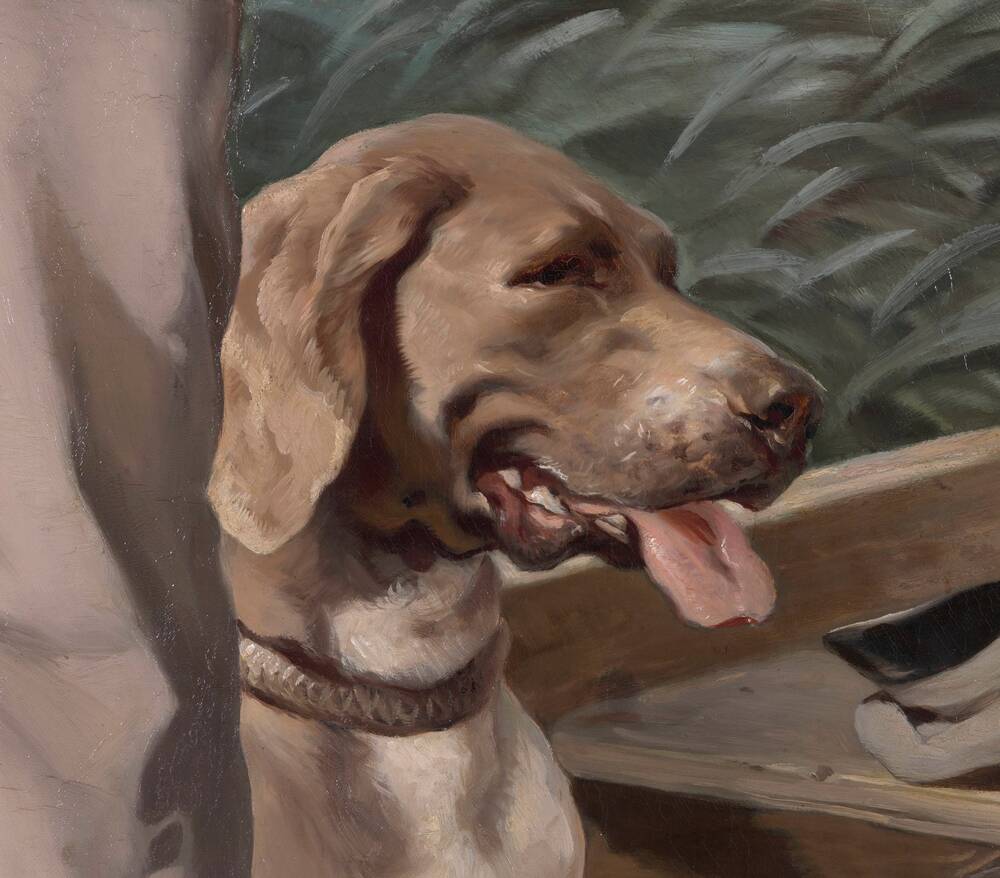
Gazing into the distance, Friedrich von Boxberg stands erect in front of us, his faithful dog behind him. Proudly, he displays his fine musket together with – at the back of the boat – one of the ducks he has shot. In the background, we can see his family home – Schloss Zschorna. A portrait of a successful man – or is it? After all, Boxberg is not standing on firm ground, but a swaying boat. His body seems rather puffed up, and he has rings around his eyes. In this work, the artist Ferdinand von Rayski has given us a realistic portrait of his subject, warts and all – and so opens up spaces for other readings of this full-length figure, seemingly so impressive at first sight.
During the May Uprising in Dresden in 1849, Friedrich von Boxberg supported Friedrich August II, King of Saxony, and ordered troops to shoot at those fighting for freedom – some of whom he knew personally. Afterwards Boxberg withdrew to Schloss Zschorna, his country house, where he was visited by Ferdinand von Rayski. In that sense, this portrait is also informed by the social conflicts of the time.
One of the most respected portrait artists of his day in Dresden, Rayski was admired precisely for his ability to capture an almost psychological study of his subjects. As curator Holger Birkholz explains, this work marks the transition from traditional painting to a freer style – one which ultimately anticipated the development of plein air landscape painting in Impressionism.
“This is evident, first and foremost, in Rayski’s depiction of the landscape, although the use of light in modelling this composition is equally apparent in his rendering of Friedrich von Boxberg’s clothes. Importantly, this work dates from a time when photography already existed – and of course artists, especially portraitists, were interested in this new medium since, in a certain sense, it was competing with them. When we look at the reed grass – for instance, as our eyes are led behind the figure across the lake – we can see it almost seems to capture the blurred motion of grass moving in the wind.”
It is, then, moments of blurring which lend this scene such a vivid realism and anticipate developments in modern art.
Vzpřímeně a s pohledem upřeným do dálky tu před námi stojí Friedrich von Boxberg a pyšně nám prezentuje svou loveckou zbraň. Za ním vidíme jeho věrného psa, ulovenou kořist a – vzadu za jezerem jeho zámek Zschorna. Obraz úspěšného muže. Nebo přeci jen ne? Boxberg stojí na kolísající se loďce, má kruhy pod očima a jeho obličej vypadá trochu odule. Malíř a autor obrazu, Ferdinand von Rayski, nic nepřikrášlil. A proto Boxbergův portrét v životní velikosti, který na první pohled působí velmi reprezentativně, připouští také jiné interpretace.
Během drážďanského povstání roku 1849 stál Friedrich von Boxberg na straně krále a nechal střílet na povstalce bojující za svobodu, přestože některé z nich osobně znal. Poté se uchýlil na svůj zámek Zschorna, kde ho von Rayski navštívil. Zohledníme-li tuto skutečnost, pochopíme, že portrét odráží také tehdejší sociální konflikty.
Rayski byl ve své době v Drážďanech nejuznávanějším portrétistou právě proto, že dokázal zachytit také psychologii portrétovaných osob. Podle kurátora Holgera Birkholze představuje obraz přechod od tradiční malby k volnějším malířským formám, z nichž nakonec vyvinuli impresionisté plenérovou malbu:
„To se projevuje především v zobrazení krajiny, ale také v zobrazení oděvu Friedricha von Boxberg a v tom, jak Ferdinand von Rayski pracuje se světlem a modeluje jím například oblečení. Je třeba si uvědomit, že tento obraz vznikl v době, kdy už byla fotografie poměrně rozšířená. Malíři se samozřejmě o toto médium zajímali, a to především portrétisté, protože fotografie určitým způsobem představovala také konkurenci jejich způsobu práce. Pokud si pozorněji prohlédnete rákos za postavou ve výhledu na jezero, uvidíte, že se zde malíři podařilo zachytit nezaostřený pohyb rákosu.“
Jsou to tedy právě momenty rozostření, které na nás působí obzvlášť realisticky, ale zároveň naznačují cestu k modernímu umění.
- Location & Dating
- 1861
- Material & Technique
- Oil on Canvas
- Dimenions
- 221 x 141 cm (Katalogmaß 2010) 220 x 142,5 cm (Inventurmaß, 28.04.2010) 245,5 x 167,5 x 10,5 cm (Rahmenmaß, Tobias Lange, 28.04.2010)
- Museum
- Galerie Neue Meister
- Inventory number
- Inv.-Nr. 04/04