
Further Media
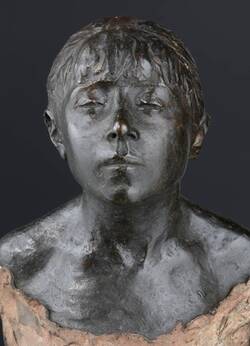
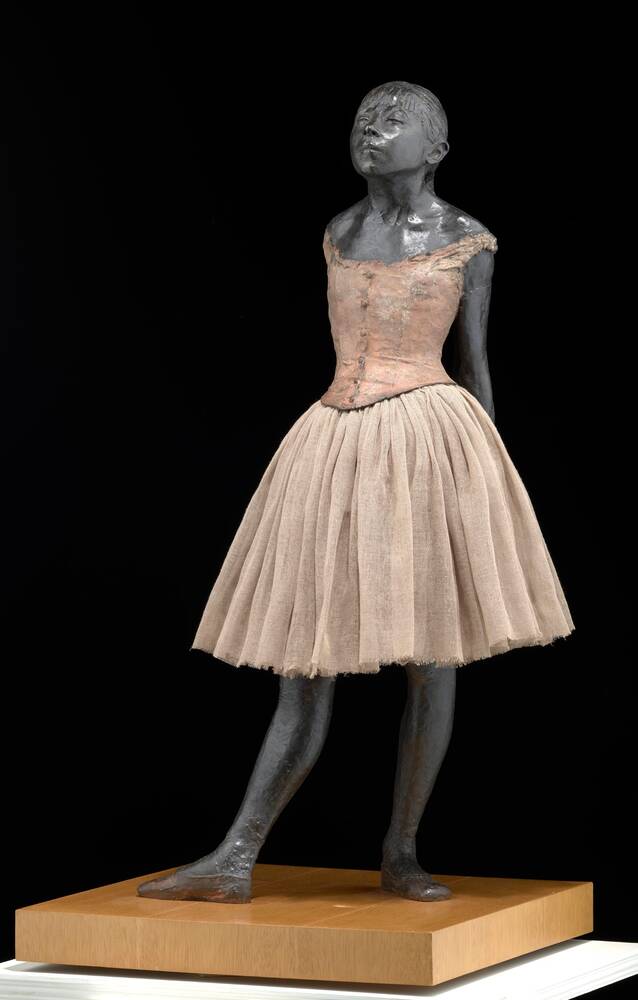
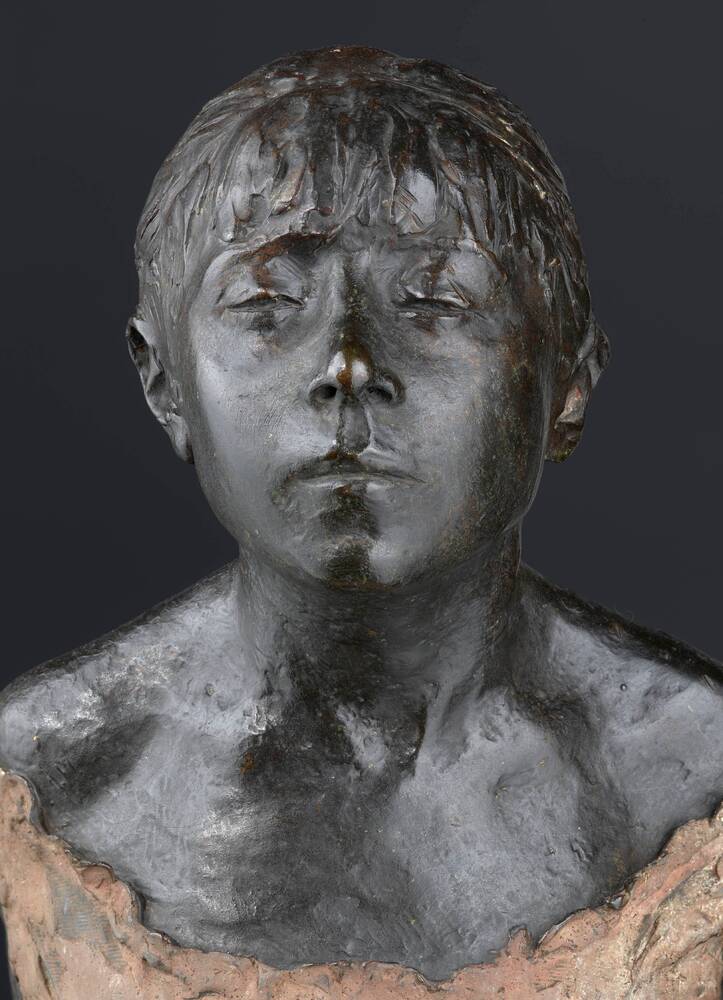
Her feet turned out and body fully stretched, the little ballerina takes up a classic ballet stance. Her eyes are half-closed, her chin titled upwards.
With his figure of a fourteen-year-old dancer, Edgar Degas created something entirely new in sculpture. Here, we are showing a bronze version of his work. The original was made in tinted beeswax modelled over a support of wire, wood, old paint brushes and rope. He then gave the figure a wig of real hair, added a hair ribbon, and dressed her in a bodice, tutu and ballet shoes – an exceptionally unusual choice of materials for his time!
When he showed the little dancer at the Sixth Impressionist Exhibition in Paris in 1881, it produced a wave of outrage among the public and press. The comments decried the dancer as a “monkey” or a “monster”, or condemned her “criminal physiognomy”.
For most visitors to the show, the role of sculpture was to present heroic depictions of famous figures or idealised bodies with smooth surfaces. But Degas’s choice of materials seemed to ridicule the traditional art of sculpturing. As if that was not enough, he raised an image of a teenage ballerina to the status of art – and at that time, such ballerinas were considered close to prostitutes.
That was the first and only time that Edgar Degas publicly exhibited one of his sculptures.
How would it be seen today? Does it expose a young under-age girl to a voyeuristic gaze? Or does it sensitively express the character of a self-confident young girl? What do you think?
V baletní póze, se špičkami vytočenými ven a s propnutým tělem tu stojí malá čtrnáctiletá tanečnice s napůl zavřenýma očima a bradou vzhůru.
Edgar Degas se v tomto díle vydal úplně novou cestou. Vidíme zde její bronzovou verzi. Originál tenkrát Degas vytvořil z obarveného včelího vosku, který nanesl na nosnou konstrukci z drátu, dřeva, štětců a provazů. Poté voskové soše nasadil paruku z pravých lidských vlasů, do které zapletl mašli, a oblékl jí živůtek, tutu a baletní piškoty. Na svou dobu to byl velmi neobvyklý výběr různých materiálů!
Když roku 1881 vystavil Malou tanečnici na šesté výstavě impresionistů v Paříži, vyvolal u publika a novinářů velmi kritickou odezvu, kterou bychom dnes pravděpodobně nazvali tzv. „shitstormem“. V komentářích byla tanečnice označována za „opici“, „monstrum“ či „zločinecké vzezření“.
Sochařství mělo v očích většiny tehdejších návštěvníků zobrazovat heroické činy a skutky slavných osobností nebo idealizovaná, pečlivě vypracovaná lidská těla. Degas však použil materiály, které se jako by vysmívaly ctihodnému sochařskému řemeslu. A co víc: Degas ve svém uměleckém díle zobrazil baletku, které měly v té době pověst prostitutek.
Byla to poprvé a také naposledy, že Edgar Degas vystavil jednu ze svých soch.
Jak by dopadl dnešní posudek? Vystavuje zde obraz nezletilé dívky voyeurským pohledům? Nebo citlivě vyjadřuje její osobnost v sebevědomém postoji? Utvořte si svůj vlastní názor.
- Location & Dating
- c. 1880 (cast after 1917)
- Material & Technique
- Cast metal, copper alloy (brass), partially painted, textile (cotton)
- Dimenions
- Gesamt mit Tutu 2023:
- Museum
- Skulpturensammlung
- Inventory number
- ZV 3680