Further Media
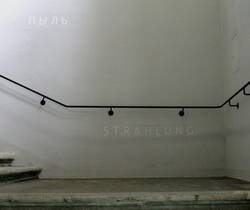
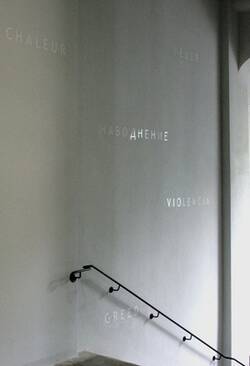
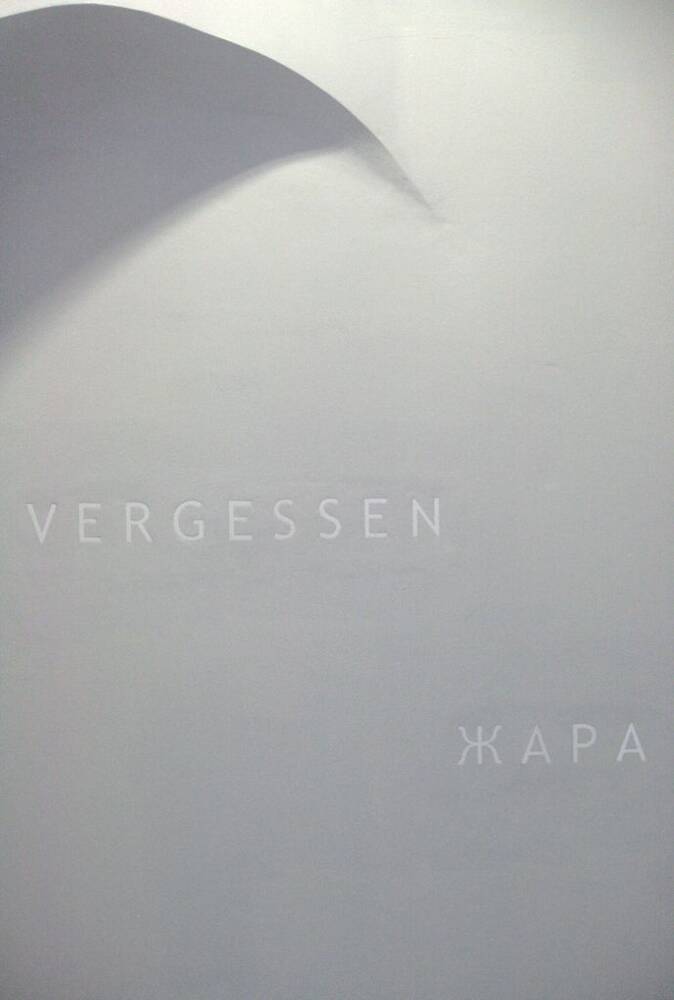
For Norbert Radermacher, museums resemble large containers protecting and preserving art works. But they are only connected to the present through the people that visit them. At the same time, museums and the treasures they preserve are exposed to a wide range of dangers. In Dresden, for example, the idea of those dangers immediately conjures up the city’s devastating bombing in the Second World War or the catastrophic floods in 2002. When the flood waters receded, the Albertinum required extensive refurbishment and a completely new storage facility.
For the Albertinum’s reopening in 2010, Norbert Radermacher created a site-specific installation intimately connected with the building and its collection. Called Sediment, the installation refers to the past inscribed in the Albertinum – a history stretching back more than 450 years. The title, though, also evokes the work’s location chosen by the artist – the south-west stairwell. As Radermacher says, this is like a vertical sediment core stretching over the building’s entire height. Rather than set in an exhibition gallery, the installation occupies a kind of transitional space where visitors don’t expect to find art works. The installation comprises two elements and is so unobtrusive it can easily be overlooked.
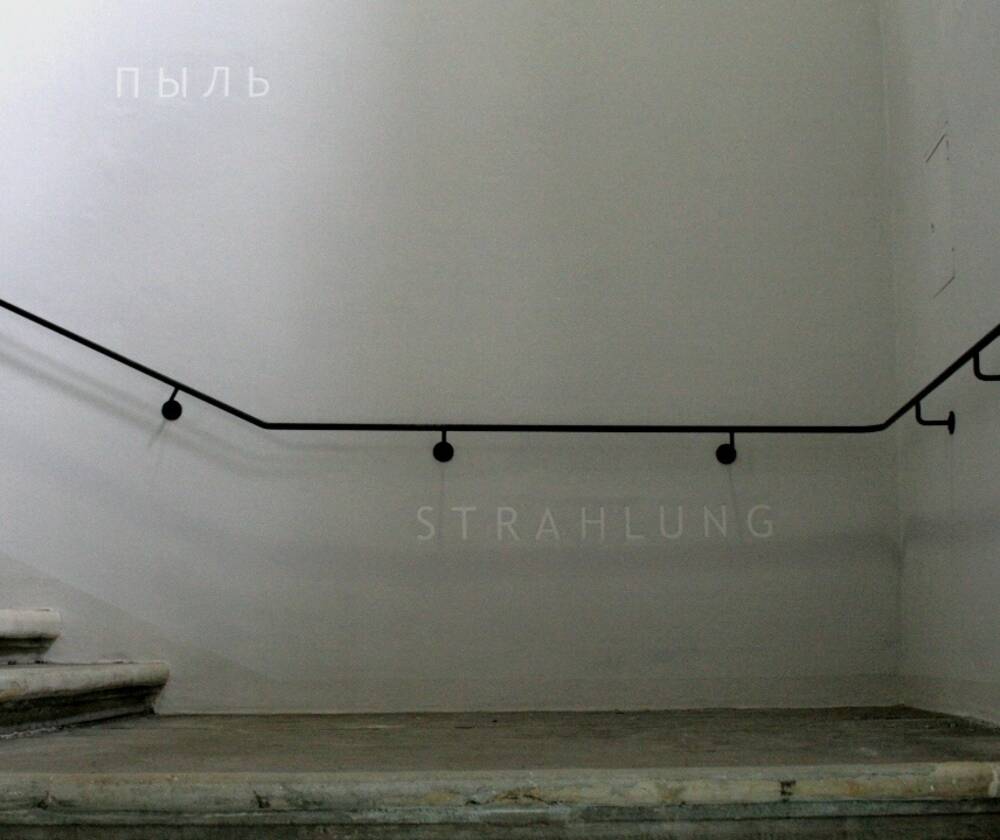
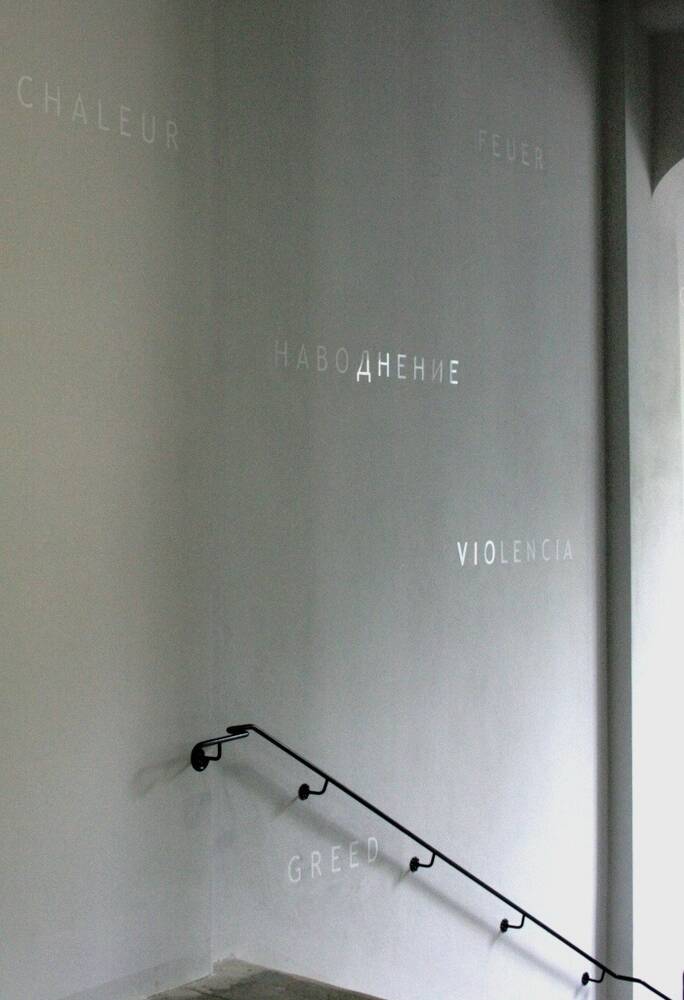
In the first part, Radermacher has summarised the dangers threatening art – past, present and future – in twelve words: Neglect, tremors, loot, lightning, fire, flood, violence, greed, torridity, dust, radiation, and oblivion. The white ceramic letters are set in the white walls in four different languages. The second part of the installation recalls the many works lying dormant in the storage depots – some not exhibited for a very long time. On a wall, a digital projector displays work titles, the names of the artists, and the work’s date and materials. The selection of works is entirely random and the information is only projected for a few seconds before it slowly starts to fade. Yet Norbert Radermacher is convinced that even without images of the works, the words alone can trigger memories.
Pro Norberta Radermachera představují muzea obrovské nádoby, v nichž jsou umělecká díla uložena a chráněna, ale se současností je spojují pouze lidé, kteří do muzejí přicházejí. Zároveň jsou muzea a poklady, které se zde nacházejí, vystaveny mnoha nebezpečím. V případě Drážďan si okamžitě vzpomeneme na ničivé bombardování za druhé světové války nebo na katastrofální povodně v roce 2002, které si vyžádaly rozsáhlé opravy a přestavbu Albertina.
Pro znovuotevření v roce 2010 vytvořil Norbert Radermacher instalaci, která je úzce spjata s budovou a jejími sbírkami. Název „Sediment“ odkazuje na více než 450 let historie, která je s budovou spjata, – a na místo, které si umělec pro instalaci vybral: jihozápadní schodiště, které se podle jeho slov táhne po celé délce a výšce schodiště jako vrt v sedimentu. Nejedná se o žádný výstavní sál, ale spíše o tranzitní prostor, ve kterém návštěvníci neočekávají žádné umění. Instalace se skládá ze dvou částí a působí natolik střídmě, že je možné ji lehce přehlédnout.
V první části shrnuje Radermacher ve dvanácti pojmech všechna nebezpečí, která – minulému, současnému i budoucímu – umění hrozí. Ve čtyřech jazycích a v bílých keramických písmenech tu na zdi čteme: neopatrnost, zemětřesení, lup, blesk, oheň, povodeň, násilí, chamtivost, horko, prach, záření a zapomnění. Druhá část nám má připomenout četná díla, která leží v depozitářích. Některá z nich nebyla již dlouho vystavena. Videoprojektor promítá na zeď názvy děl, autorů, dobu vzniku a použitý materiál. Výběr nemá žádný systém a text je viditelný jen několik vteřin, než zase pomalu zmizí. Norbert Radermacher je přesvědčen, že i bez ukázek děl samotné pojmy u nás vyvolají vzpomínky.
- Location & Dating
- 2007-2010
- Material & Technique
- Installation, ceramics, video projection in the stairwell of the Albertinum, Georg-Treu-Platz
- Museum
- Galerie Neue Meister
- Inventory number
- Inv.-Nr. 2010/08