Further Media
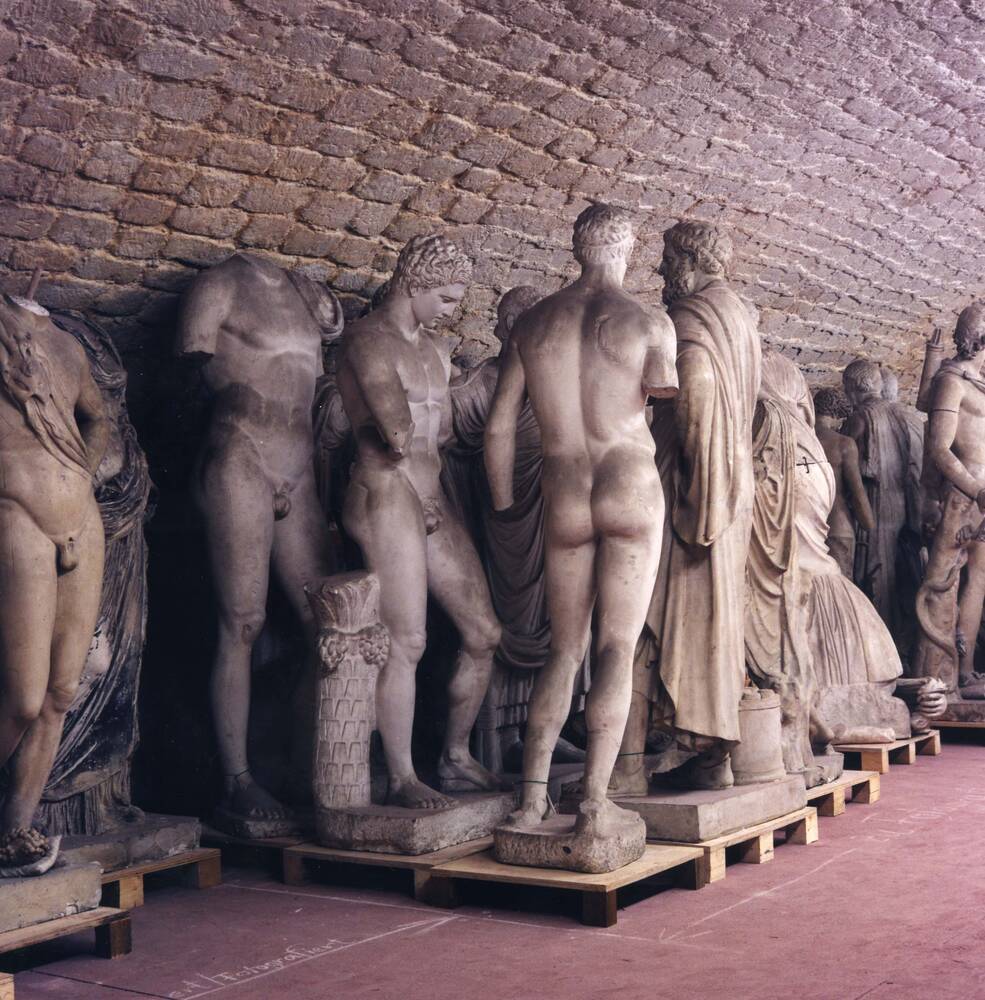
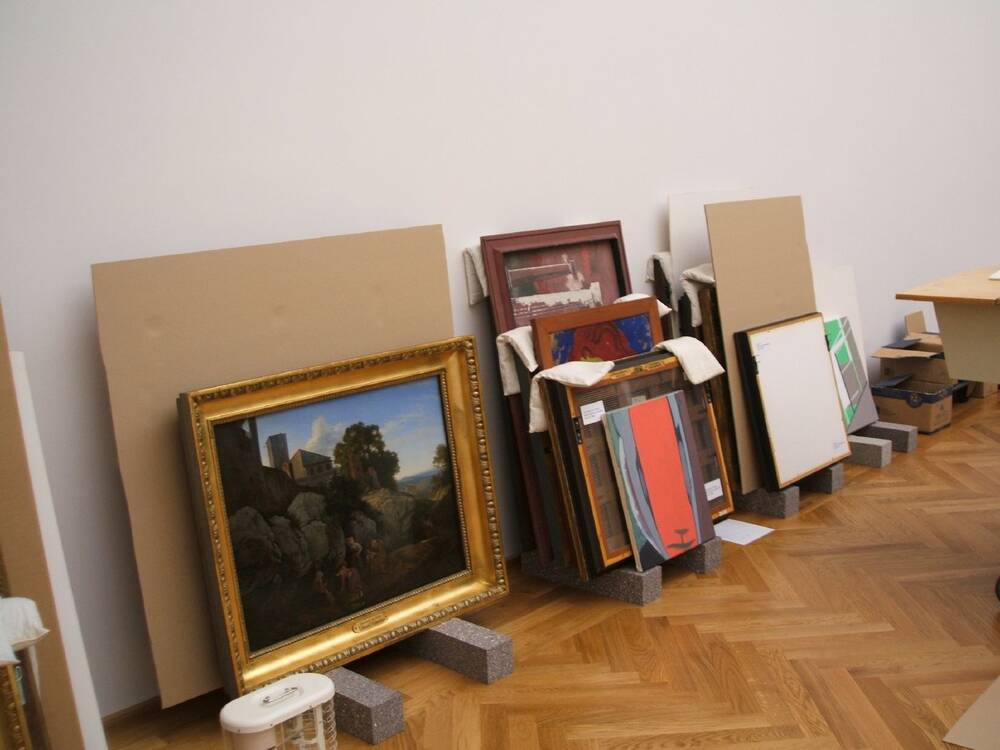
Alexandra Schellenberg and Jürgen Lange work in the Albertinum’s storage depot, and they have a very varied working day.
"We have a wide range of duties from transporting art works, physically moving art works from A to B inside the museum, to packing, examining and appraising, as well as communicating with logistics companies and our restoration workshops in the Albertinum. But we’re also responsible for general organisation and desk work – keeping records up to date is crucial, and all the changes affecting the art works have to be documented in various lists or in databases. A mixed bag, I’d say."
"That’s right, and also … Well, I’d say, for instance, a big part is also looking after scholars, scientists and academics working on their projects. (…) I have to prepare the art works, and provide access to them. So of course I have to know where things are, and what things we have."
The Albertinum has several storage depots – one of them high up in the air.
"If you’re in the atrium and look up, what you can see just looks like a simple ceiling. But above that ceiling is, as it were, the first floor of our storage depot. This facility, which runs over the atrium’s entire length and breadth, is for paintings. The second floor above it is home to our restoration workshops."
The depot over the atrium is known as the ‘Ark’. It was constructed after the River Elbe broke its banks in 2002 and the water swept into the town.
"Many storage depots in the cellar were completely flooded. (…) (08:26) So afterwards the big question was: What can we do? Where can we locate our new depots? Or given the proximity to the Elbe – and from here, you can actually see it – how can we protect ourselves against similar floods in future?"
There was an architectural competition…
"…Yes, the team of architects that won the competition had the idea of an ‘Ark’ constructed over our atrium, which had originally been open."
With its limited load-bearing capacity, the Ark only stores paintings; the sculptures aren’t stored there, since some of them are extremely heavy.
Alexandra Schellenbergová a Jürgen Lange pracují v depozitáři Albertina, kde každý den vládne pestrý program.
"Staráme se tu vlastně od transportů, tedy skutečně od fyzického převozu umění tady v budově z místa A na místo B, přes balení, znalecké posudky, odhady, komunikaci s přepravními společnostmi či restaurátorskými dílnami tady v domě, až po vlastní kancelářskou práci jako dokumentaci, která je velmi důležitá, protože všechny změny, kterým předměty podléhají, musíme dokumentovat v různých seznamech nebo databázích. Řekla bych, že to je docela pestrá směsice."
"Ano, také musíme ... Řekl bych, že se musíme také starat o vědecké pracovníky, například během vědeckých projektů. (...) Já musím připravovat jednotlivá díla. Musím jim zaručit přístup. Musím samozřejmě vědět: Kde je co? Co je co?"
Albertinum má několik depozitářů a jeden z nich se nachází ve vzdušných výškách.
"Když stojíte v atriu a podíváte se nahoru, vypadá zdejší strop na první pohled úplně obyčejně. Ale za ním se takříkajíc skrývá první patro depozitáře. Jeho plocha se rozkládá přes celou délku a šířku atria. A nad ním se nachází druhé patro, ve kterém jsou umístěny restaurátorské dílny."
Depozitář nad atriem nazýváme „Archa“. Byla postavena jako reakce na povodně na Labi v roce 2002.
"Opravdu mnoho depozitářů, které se nacházely v suterénu, bylo skutečně zatopeno. (...) (08:26) A pak samozřejmě přišla velká otázka: Co podnikneme? Kde je možné zřídit nové depozitáře? Nebo jak můžeme v této bezprostřední blízkosti Labe – které tu teče hned na dohled – jak můžeme muzeum chránit před budoucími povodněmi?"
Konala se architektonická soutěž …
"… ano, tým architektů, který soutěž vyhrál, přišel právě s tímto návrhem archy a s návrhem atrium, které bylo původně otevřené, zastřešit."
Kvůli omezené nosnosti jsou však v Arše skladovány pouze obrazy a nikoli sochy, které jsou částečně velmi těžké.